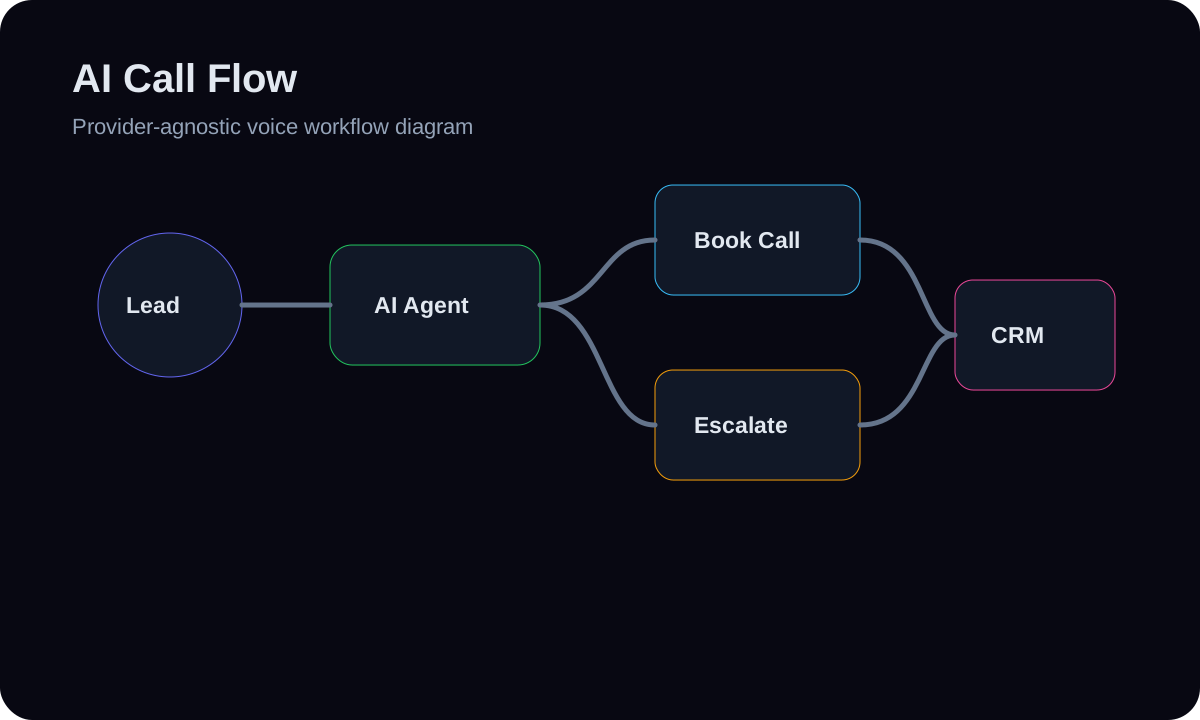
Lead Scoring Assistant

Medium AI Agent system

An agent step that turns a raw conversation (call, chat, or SMS) into a structured fit-and-intent score with a short rationale, so leads route to the right owner by quality instead of arrival order. Reads the conversation the way a closer would and writes the verdict to the CRM.

Timeline 4-8 days

HMX Zone

ai agent system

Medium Agents system

Verified HMX-owned system details.

Timeline
4-8 days
Visual motif
Reasoning orbit
Live datum
A message is classified, noted, then handed to a human when needed.

operating facts

Outcome

Hot leads reach an owner first with a reason attached, and weak leads stop crowding the top of the queue.

Main risk

An opaque or biased score sends a good lead to the slow lane (or a weak one to your best closer).

Prevention

Require a written rationale with every score, calibrate bands against real conversions, and keep scoring inputs transparent.

Fallback

On borderline or low-confidence scores, route to a neutral review lane rather than auto-demoting the lead.

system architecture

Lead Scoring Assistant Architecture

the scoring dimensions and
Prompt an OpenAI model to
OpenAI
GoHighLevel
Human Escalation
Agent Handoff
  1. 01the scoring dimensions and

    An agent step that turns a raw conversation (call, chat, or SMS) into a structured fit-and-intent score with a short rationale, so leads route to t...

  2. 02Prompt an OpenAI model to

    Prompt an OpenAI model to score from the transcript and emit a structured score plus a one-line reason

  3. 03OpenAI

    OpenAI runs the bounded conversation step for Lead Scoring Assistant while keeping tool use, transcripts, and escalation outcomes explicit.

  4. 04GoHighLevel

    Write score, band, and rationale to the CRM and route hot leads to a fast lane with an owner alert

  5. 05Human Escalation

    On borderline or low-confidence scores, route to a neutral review lane rather than auto-demoting the lead.

  6. 06Agent Handoff

    Hot leads reach an owner first with a reason attached, and weak leads stop crowding the top of the queue.

how it is built

  1. 01Define the scoring dimensions (fit, intent, urgency, budget signal) and the bands that change routing
  2. 02Prompt an OpenAI model to score from the transcript and emit a structured score plus a one-line reason
  3. 03Write score, band, and rationale to the CRM and route hot leads to a fast lane with an owner alert
  4. 04Spot-check scores against real outcomes and adjust the rubric over time

architecture notes

Architecture overview

Lead Scoring Assistant uses a bounded agent handoff layer for AI Agents. An agent step that turns a raw conversation (call, chat, or SMS) into a structured fit-and-intent score with a short rationale, so leads route to t... The architecture connects the scoring dimensions and, openai, gohighlevel, and agent handoff with an explicit control path.

  • Conversation layer: Define the scoring dimensions (fit, intent, urgency, budget signal) and the bands that change routing
  • Reasoning layer: Prompt an OpenAI model to score from the transcript and emit a structured score plus a one-line reason
  • Tools layer: OpenAI runs the bounded conversation step for Lead Scoring Assistant while keeping tool use, transcripts, and escalation outcomes explicit.
  • Records layer: GoHighLevel connects calls, messages, calendar work, or CRM writes while require a written rationale with every score, calibrate bands against real conversions, and keep scoring inputs transparent.
  • Escalation layer: Hot leads reach an owner first with a reason attached, and weak leads stop crowding the top of the queue.

Data flow

  1. Define the scoring dimensions (fit, intent, urgency, budget signal) and the bands that change routing
  2. Prompt an OpenAI model to score from the transcript and emit a structured score plus a one-line reason
  3. Write score, band, and rationale to the CRM and route hot leads to a fast lane with an owner alert
  4. Spot-check scores against real outcomes and adjust the rubric over time

Controls and fallbacks

  • An opaque or biased score sends a good lead to the slow lane (or a weak one to your best closer).
  • Require a written rationale with every score, calibrate bands against real conversions, and keep scoring inputs transparent.
  • On borderline or low-confidence scores, route to a neutral review lane rather than auto-demoting the lead.

Tools

  • OpenAI
  • GoHighLevel
  • Vapi
  • Retell

research basis

back

Back to AI Agents

start

Build this system around your real handoffs.

The intake captures tools, failure points, access, and owner rules before scope is confirmed.