Medium CRM system

CRM Pipeline Map & Stage Logic

A documented stage map that separates how the team works from what reporting measures, so every opportunity has one clear position, one entry rule, and one exit rule per stage across GoHighLevel, HubSpot, or Pipedrive.

1-2 weeks
timeline
Medium
complexity
3
tools
4
steps

Built with real HMX CRM tool paths

GGoHighLevel
HHubSpot
PPipedrive
GGoHighLevel
HHubSpot
PPipedrive

System
facts

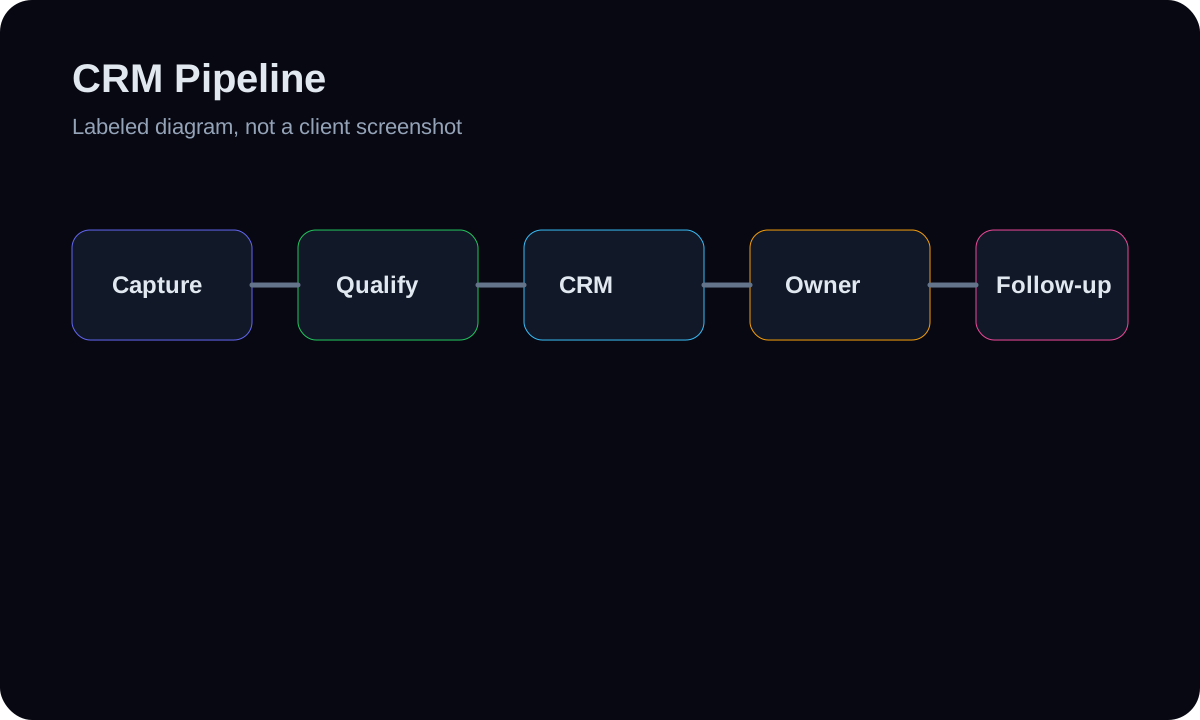
CRM Pipeline Map & Stage Logic uses a CRM operating layer for CRM Systems. A documented stage map that separates how the team works from what reporting measures, so every opportunity has one clear position, one entry rule,... The architecture connects interview sales to list the, gohighlevel, hubspot, and crm outcome with an explicit control path.

Outcome

One agreed source of truth for deal status, so reporting and forecasts stop disagreeing with what reps actually see.

Main risk

Stages get defined by reporting wishes instead of real workflow, so deals pile up in a catch-all stage and forecasts drift.

Prevention

Map stages from the actual sales motion first, keep human workflow stages separate from reporting fields, and automate only stable, well-defined transitions.

Fallback

Add a 'Needs triage' view that surfaces any deal sitting in a stage longer than its expected window so a human re-sorts it.

System architecture

CRM Pipeline Map & Stage Logic Architecture

6 nodes
Interview sales to list the
each stage's required fields
GoHighLevel
HubSpot
Unrouted Queue
CRM Outcome
  1. 01Interview sales to list the

    A documented stage map that separates how the team works from what reporting measures, so every opportunity has one clear position, one entry rule,...

  2. 02each stage's required fields

    Define each stage's required fields, default owner behavior, and whether transitions are manual or automated

  3. 03GoHighLevel

    GoHighLevel stores the canonical CRM state for CRM Pipeline Map & Stage Logic so reporting and follow-up read from one place.

  4. 04HubSpot

    Build the pipeline in the CRM (GHL Opportunities, HubSpot deal stages, or Pipedrive stages) with stage probabilities and a 'Lost' path

  5. 05Unrouted Queue

    Add a 'Needs triage' view that surfaces any deal sitting in a stage longer than its expected window so a human re-sorts it.

  6. 06CRM Outcome

    One agreed source of truth for deal status, so reporting and forecasts stop disagreeing with what reps actually see.

How it is
built

A documented stage map that separates how the team works from what reporting measures, so every opportunity has one clear position, one entry rule, and one exit rule per stage across GoHighLevel, HubSpot, or Pipedrive.

  1. 01Interview sales to list the real steps a deal moves through, then collapse them into 5-7 stages with plain-language entry/exit definitions
  2. 02Define each stage's required fields, default owner behavior, and whether transitions are manual or automated
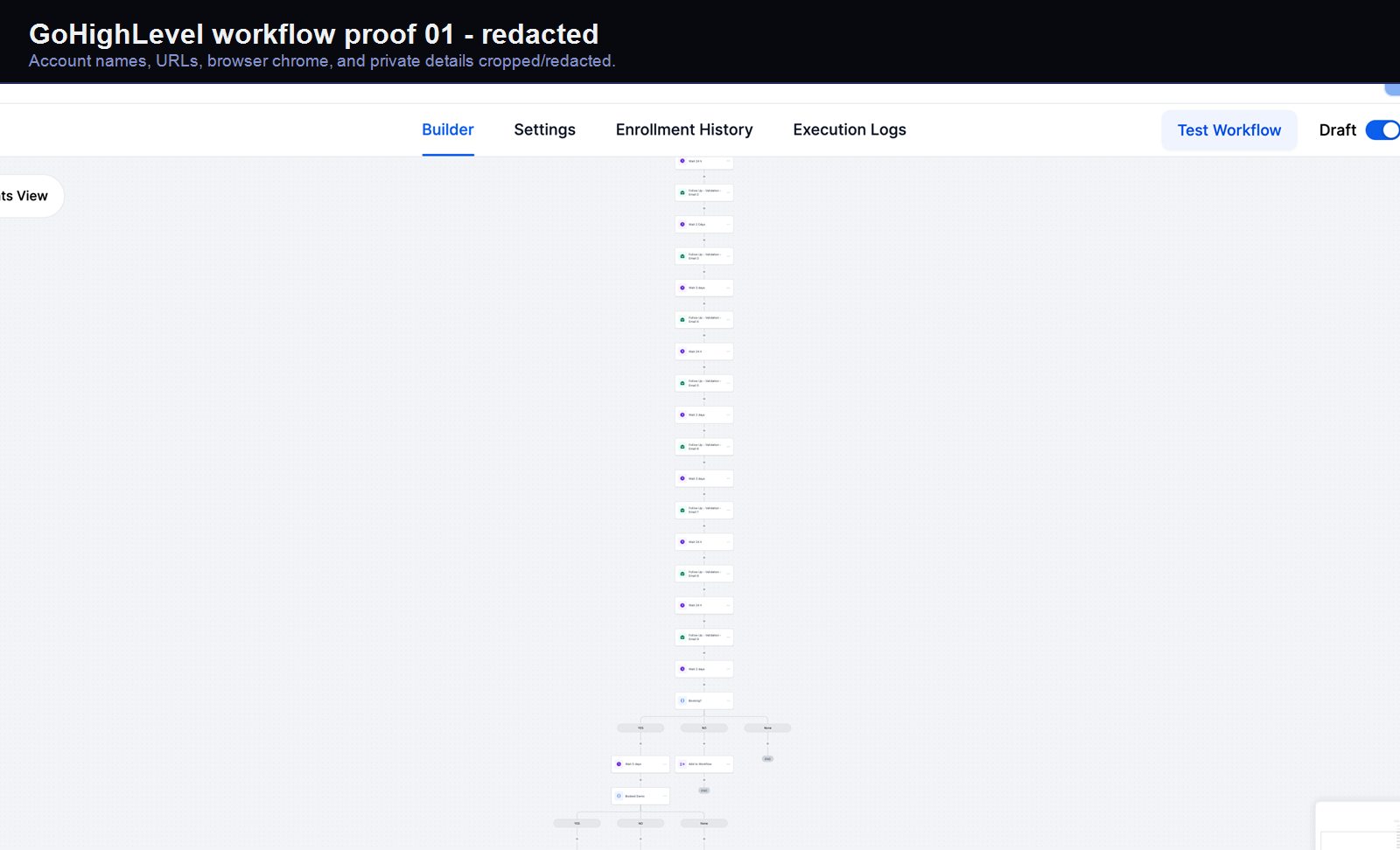
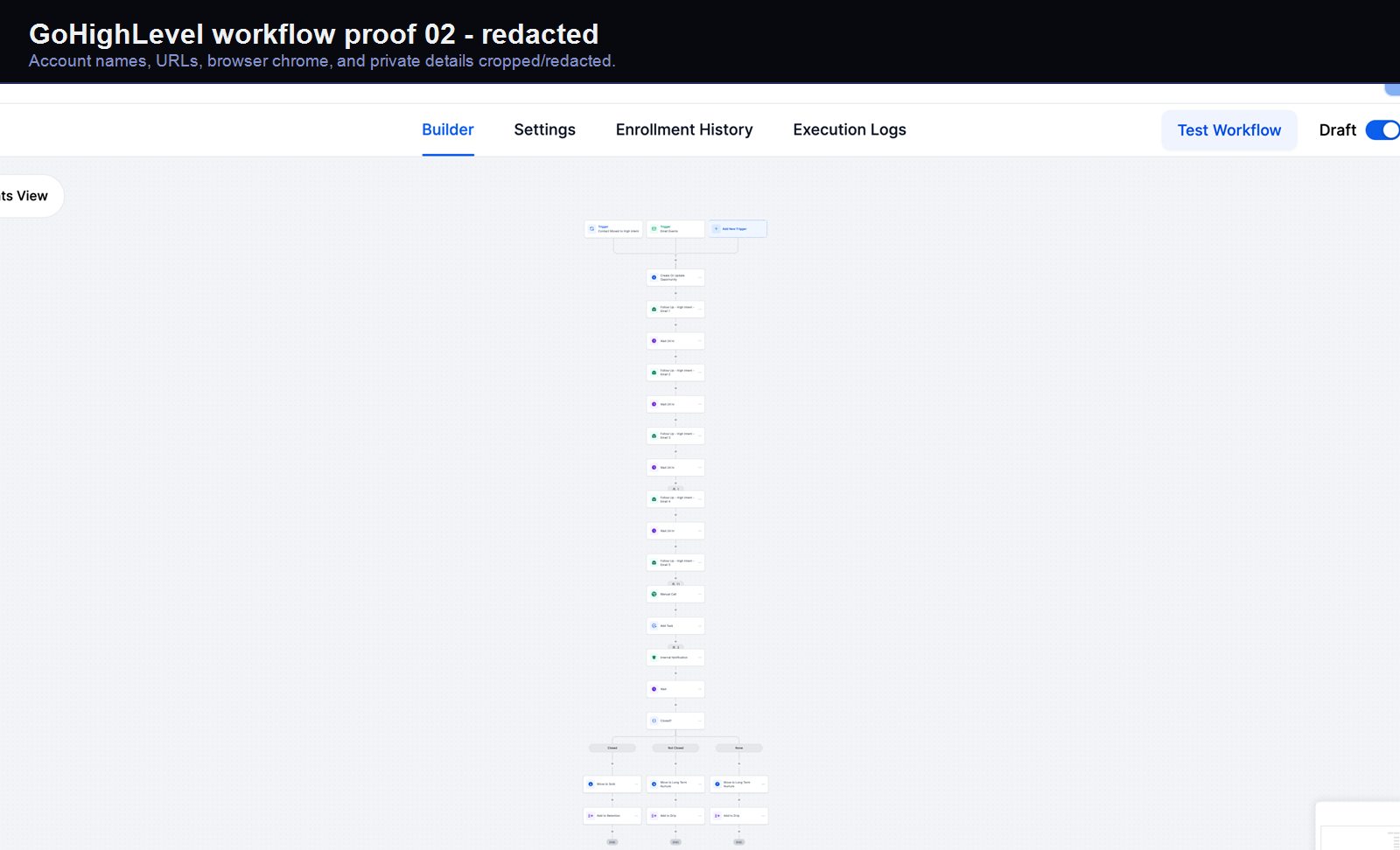
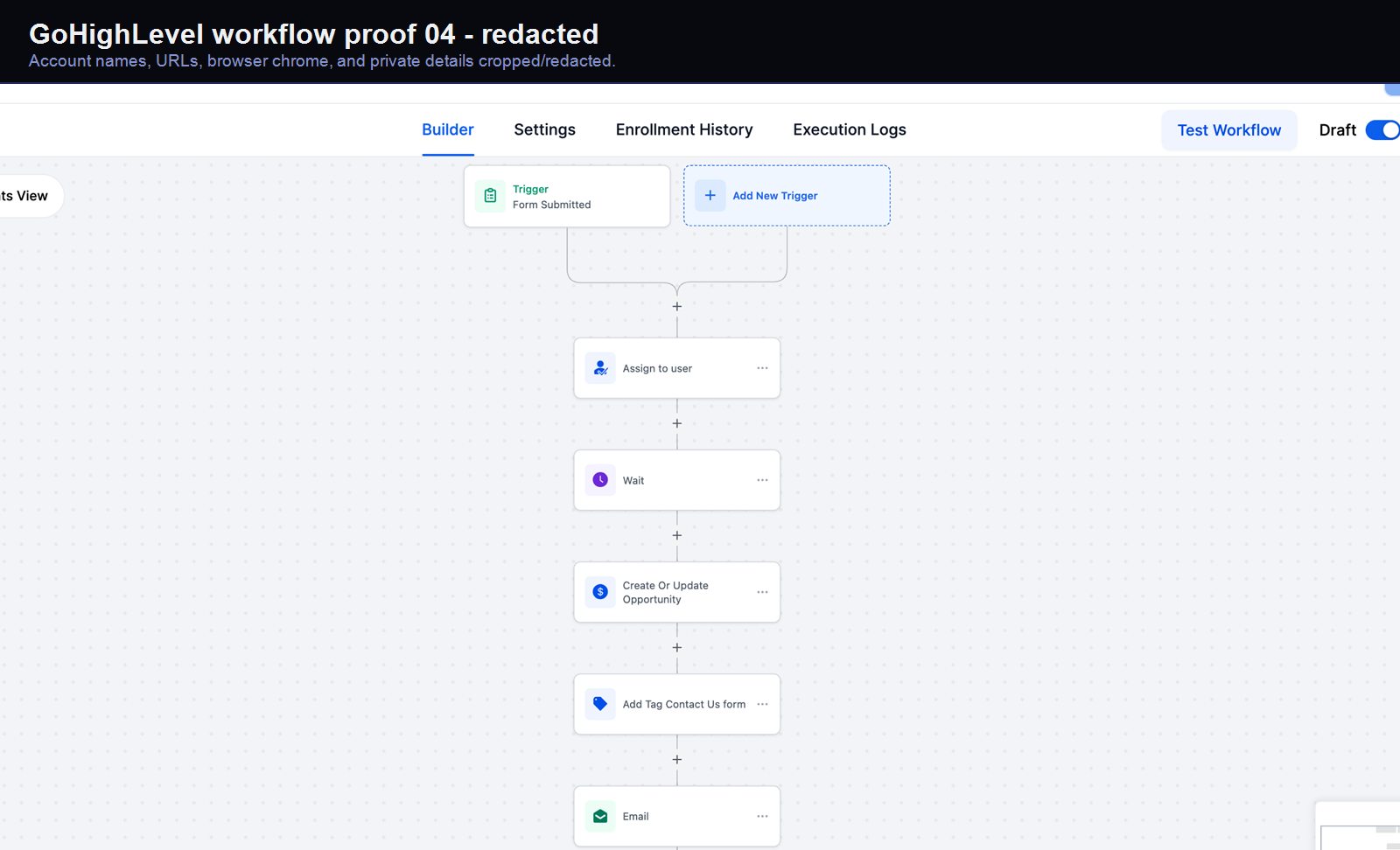
  3. 03Build the pipeline in the CRM (GHL Opportunities, HubSpot deal stages, or Pipedrive stages) with stage probabilities and a 'Lost' path
  4. 04Write a one-page stage reference and validate it against 20 live deals before locking automation to any transition

Tools

Workflow surface

  • GoHighLevel
  • HubSpot
  • Pipedrive
  • Capture layer: Interview sales to list the real steps a deal moves through, then collapse them into 5-7 stages with plain-language entry/exit definitions
  • Rules layer: Define each stage's required fields, default owner behavior, and whether transitions are manual or automated
  • CRM State layer: GoHighLevel stores the canonical CRM state for CRM Pipeline Map & Stage Logic so reporting and follow-up read from one place.
  • Automation layer: HubSpot handles routine steps while map stages from the actual sales motion first, keep human workflow stages separate from reporting fields, and automate only stable, well-defined tr...
  • Human Review layer: One agreed source of truth for deal status, so reporting and forecasts stop disagreeing with what reps actually see.

Data flow

  1. 01Interview sales to list the real steps a deal moves through, then collapse them into 5-7 stages with plain-language entry/exit definitions
  2. 02Define each stage's required fields, default owner behavior, and whether transitions are manual or automated
  3. 03Build the pipeline in the CRM (GHL Opportunities, HubSpot deal stages, or Pipedrive stages) with stage probabilities and a 'Lost' path
  4. 04Write a one-page stage reference and validate it against 20 live deals before locking automation to any transition

Controls and fallbacks

  • Stages get defined by reporting wishes instead of real workflow, so deals pile up in a catch-all stage and forecasts drift.
  • Map stages from the actual sales motion first, keep human workflow stages separate from reporting fields, and automate only stable, well-defined tr...
  • Add a 'Needs triage' view that surfaces any deal sitting in a stage longer than its expected window so a human re-sorts it.

Build this CRM system around your real pipeline

The intake captures lead sources, stages, owner rules, and fallbacks before scope is confirmed.